
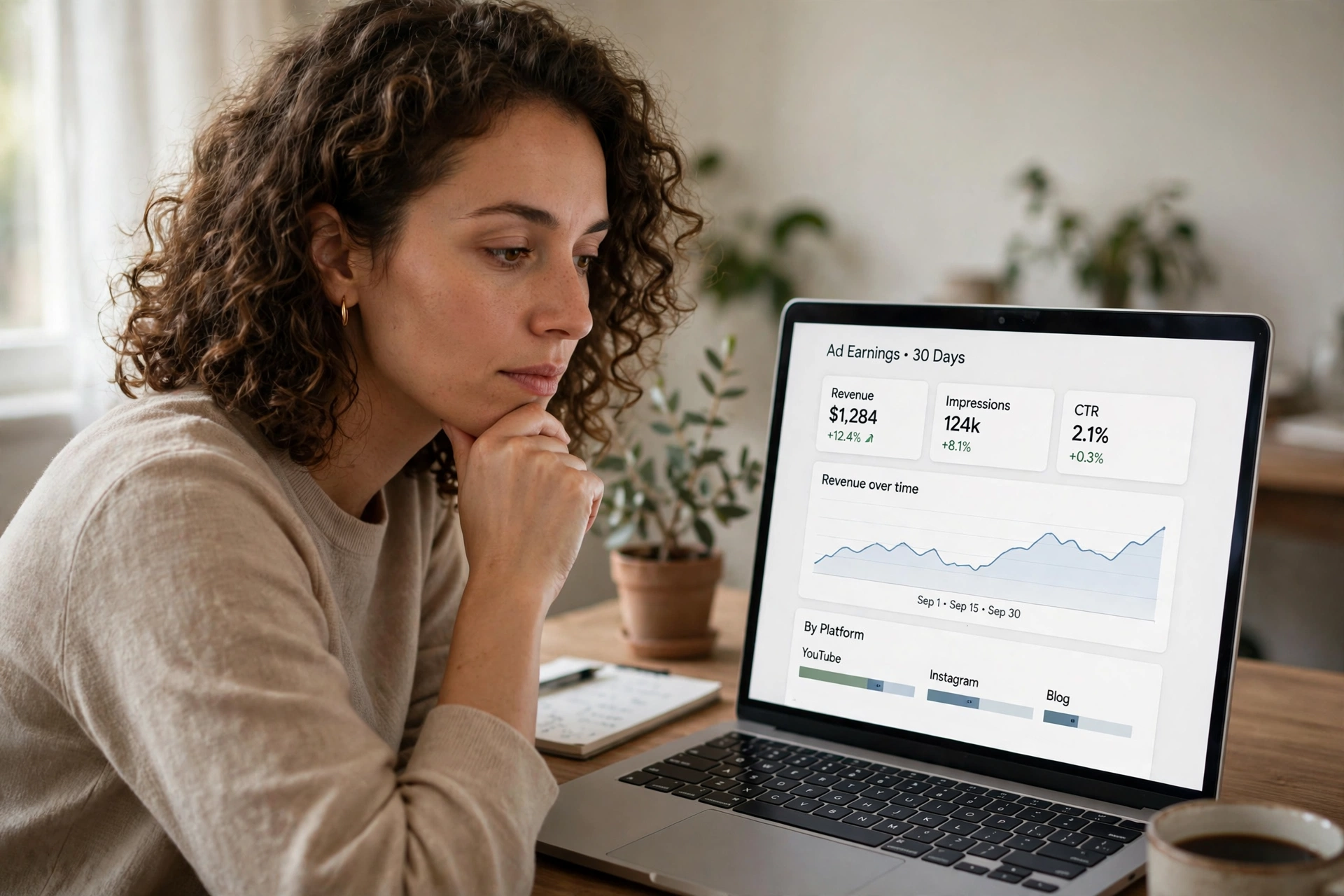
Two blogs in the same niche, with similar traffic, can earn wildly different advertising income — one settling near a $10 RPM, the other closer to $30. Those figures are simply an illustration of the gap between tiers, not a promise about any blog’s earnings. With RPM explained properly, the mystery disappears: RPM is not a rate your ad network hands you, but the outcome of a live auction in which advertisers bid for access to your readers, page by page. Who your readers are, how long they stay and how your site is built decide what those readers are worth to bidders. This guide breaks down each lever in plain English, so you can see which ones your blog can genuinely pull — and stop comparing your income to blogs playing a different game.
What RPM Actually Measures
RPM means revenue per mille — your earnings per thousand views. The catch is that “views” has two meanings. Pageview RPM divides your income by pageviews; session RPM divides it by sessions, and because one session usually contains several pageviews, session RPM is almost always the bigger number. A blog earning $200 from 10,000 pageviews has a $20 pageview RPM; if those pageviews came from 5,000 sessions, its session RPM is $40.
Before comparing your dashboard to anyone else’s, confirm which figure you are looking at. Half of all “my RPM is terrible” panic is two bloggers comparing different metrics.
The Auction Behind Every Pageview
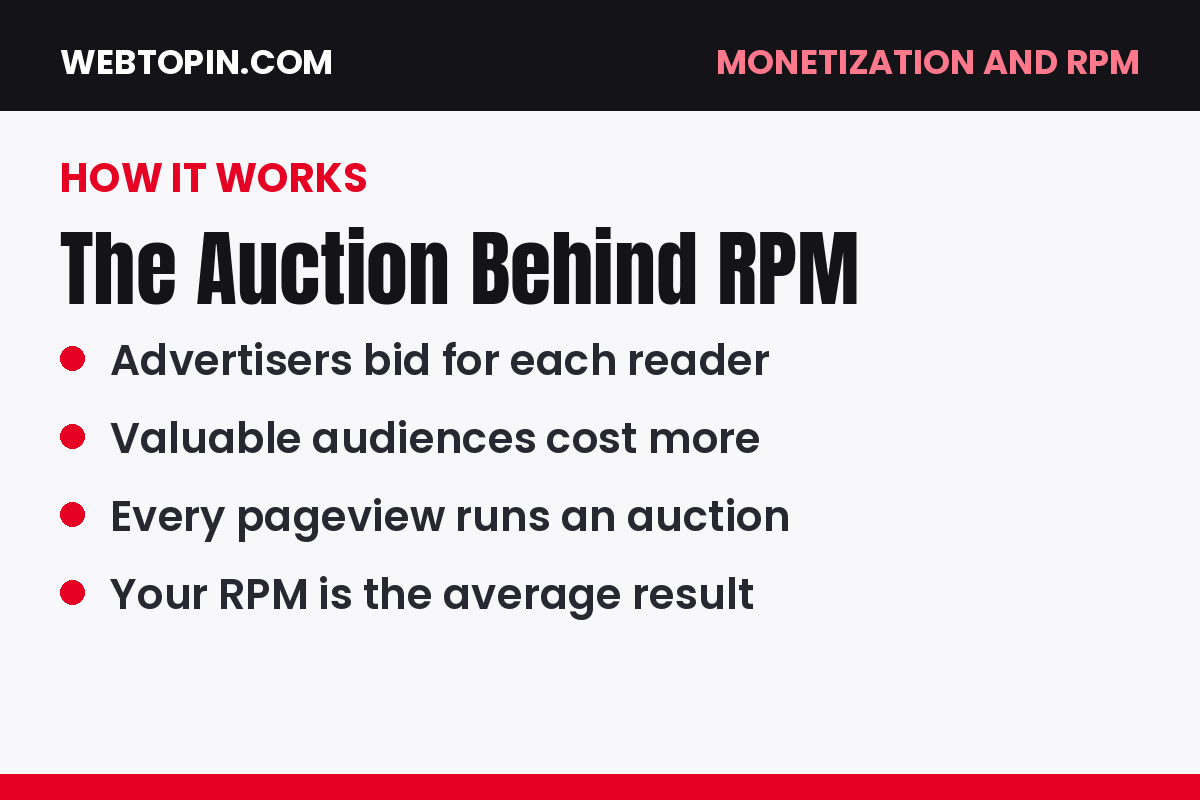
Every time a page loads, its ad slots are auctioned in milliseconds. Advertisers tell the system what a reader is worth to them — based on country, interests, device and how likely that person is to buy — and bid accordingly. A reader researching a product with a credit card nearby attracts strong bids; a casual visitor from a low-spending market attracts small ones.
Your RPM is simply the average of thousands of these tiny auctions. You cannot set it, negotiate it or trick it upward. You can only improve the inputs the bidders are pricing: the readers, the engagement and the page itself.
Lever 1 — Who Your Readers Are
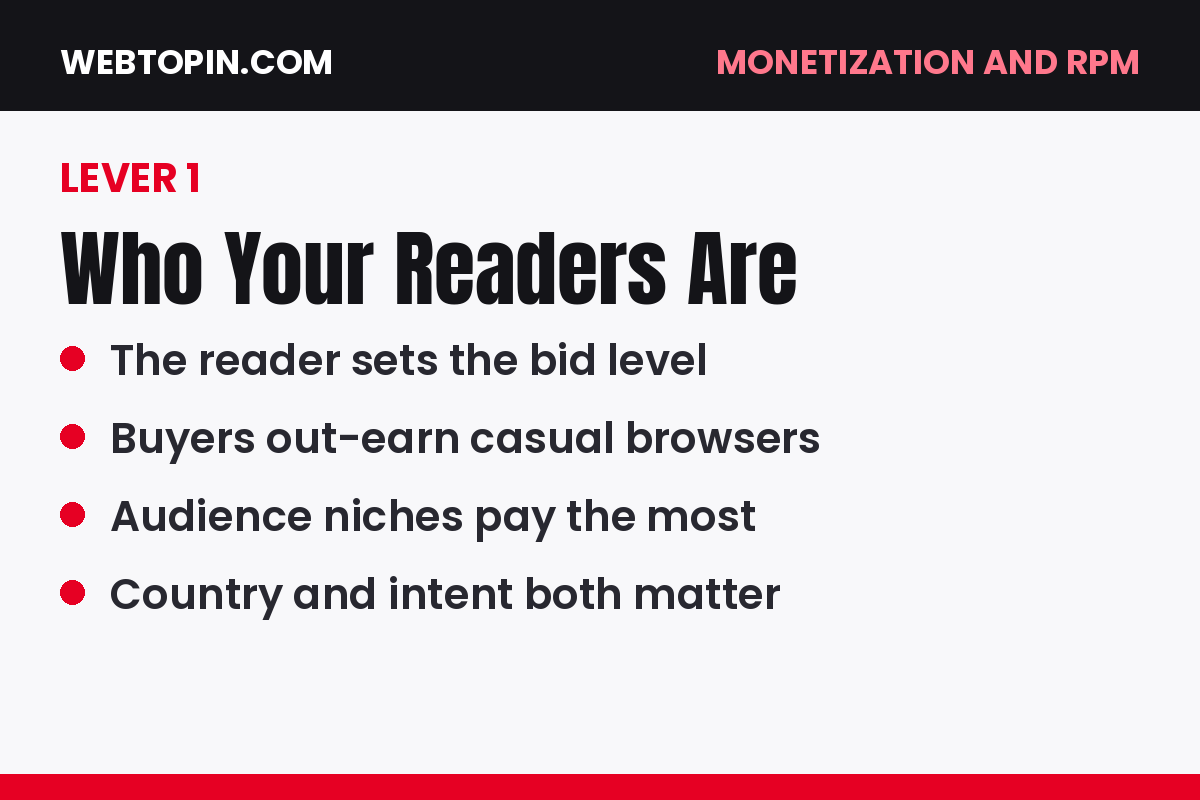
Geography is the heaviest input. Readers in the United States, United Kingdom, Canada and Australia are bid on far more aggressively than readers elsewhere, because advertisers can sell to them at higher values. Buying intent matters too: audiences researching purchases, projects and problems with budgets out-earn general entertainment browsing.
You cannot choose where a viral pin travels — but you chose your audience long before that, when you picked your niche. Audience-first niche selection is precisely why Module 2: The Audience-First Niche sits so early in our course: it quietly sets your RPM ceiling.

Lever 2 — How Long Readers Stay
An engaged reader is worth more per visit in two ways. First, a reader who stays and scrolls passes more in-content ad slots, so a single pageview carries more inventory. Second, a reader who clicks through to a second and third article multiplies your pageviews per session — and session RPM climbs with them.
The levers here are editorial, not technical: short paragraphs that keep the page moving, articles deep enough to be worth staying in, and internal links that hand the reader an obvious next step. Stay time is the rare metric that pleases readers, Pinterest and advertisers simultaneously.

Lever 3 — How Your Site Is Built
Layout silently taxes or rewards every pageview. Design mobile-first, because most Pinterest readers are on phones. Keep the page visually stable while it loads — content jumping around (layout shift) pushes ads out of view and annoys readers into leaving. Write in short paragraphs so in-content ads have natural gaps to sit in, and be wary of heavy page builders that hide those gaps from the ad script.
One more silent killer: aggressive speed settings that delay or minify your ad script can hold back earnings far more than the fractions of a second they save. Check them before blaming your niche.
Why New Sites Start on the Lowest Tier
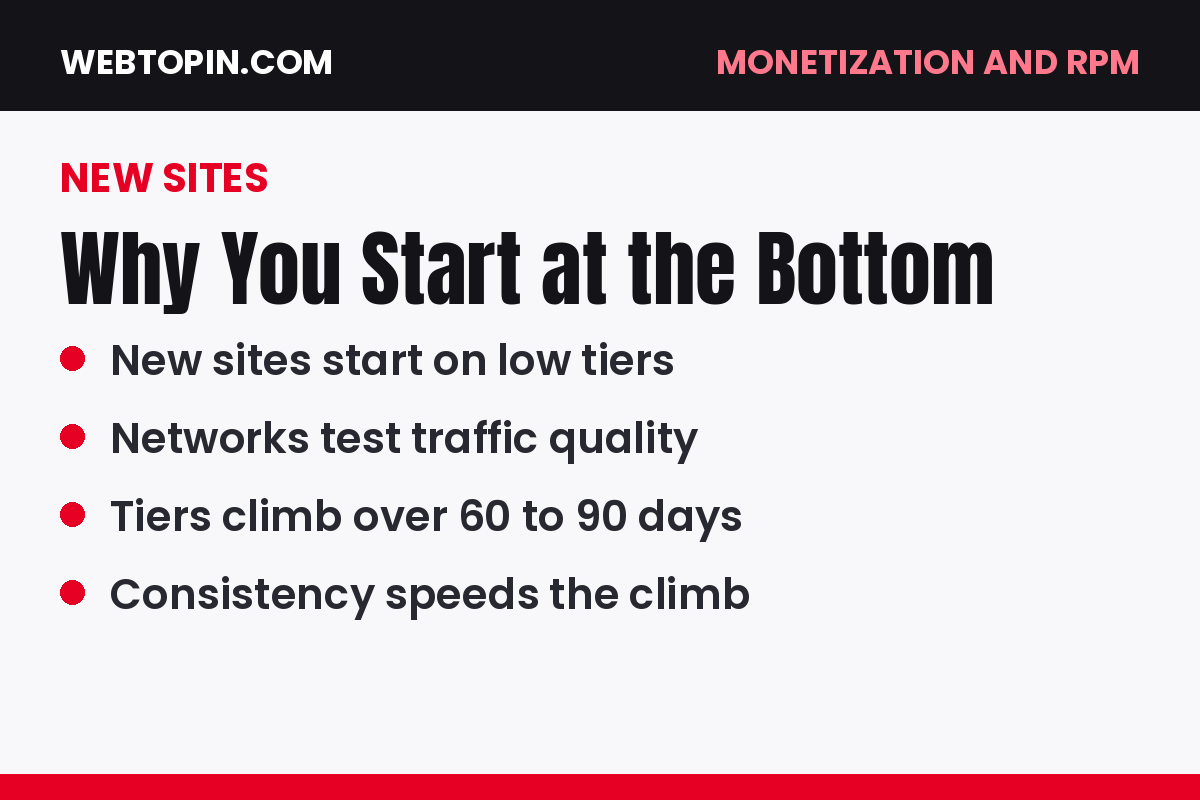
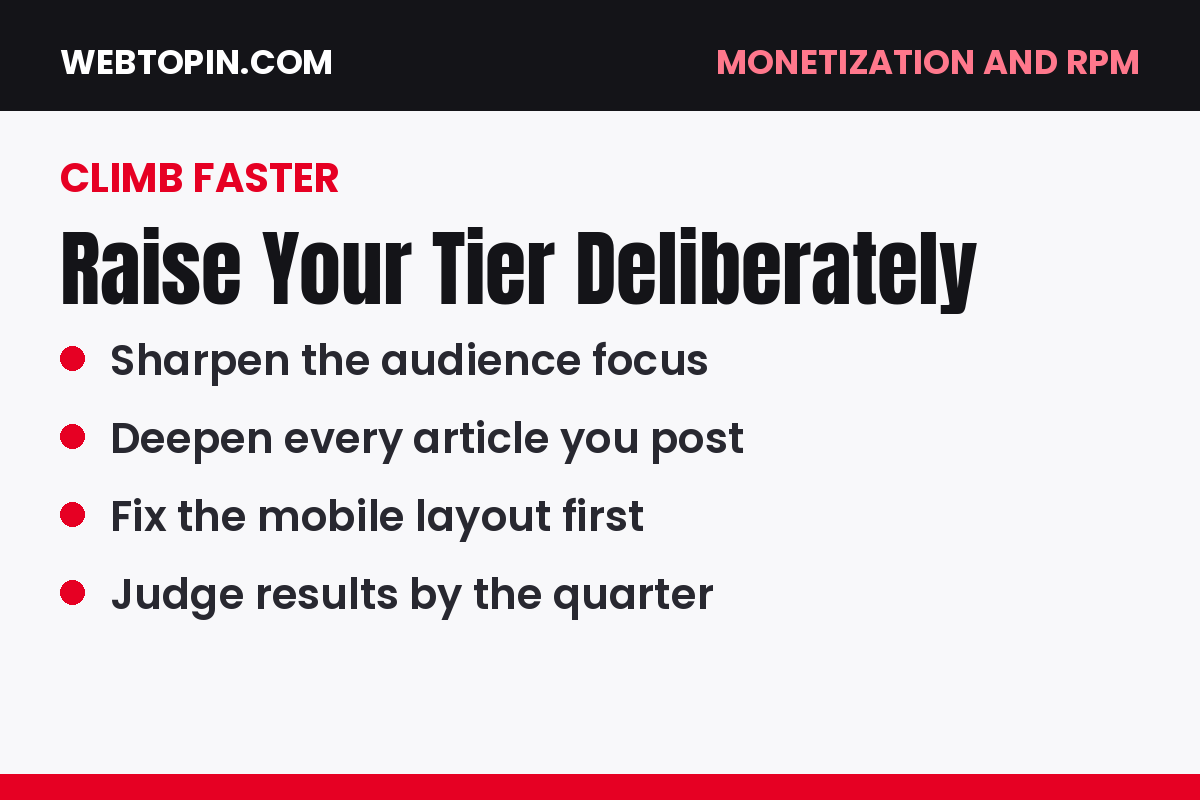
Ad networks grade sites, and a new site starts with an unproven grade. Networks place new blogs on their lowest pricing tier and raise it over roughly sixty to ninety days as quality traffic proves consistent — the same trust window your Pinterest account is working through. A low RPM in your first month on a network is the system working as designed, not evidence that your blog is broken.
How that tier system works, and how to climb it deliberately, is covered in Module 10: Monetization and RPM. And if you are not yet approved at all, start with our Mediavine Journey approval checklist and get the site ready first.
A Worked Example: Two Blogs, One Niche
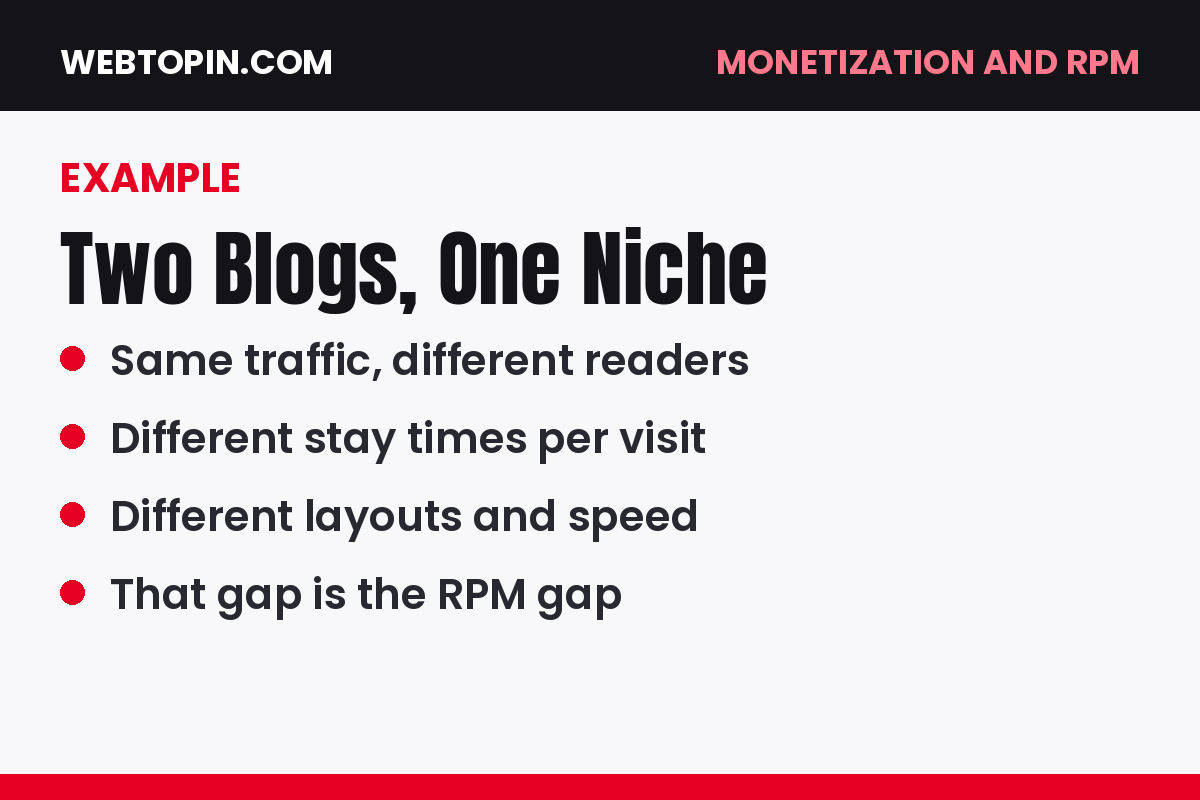
Imagine two home-organisation blogs, each receiving 20,000 pageviews in a month. These are illustrative figures, chosen to show the mechanics:
- Blog A draws mostly casual, worldwide traffic. Readers view one page quickly and leave. Advertisers bid low, and the month ends near a $10 RPM — about $200.
- Blog B writes for one specific audience in high-value countries. Readers stay, scroll and open a second article. Bids are stronger and pageviews per session higher, ending near a $30 RPM — about $600.
Same niche, similar effort, three times the income — decided almost entirely by audience, engagement and layout, not by posting more.
Frequently Asked Questions
Why did my RPM fall sharply in January?
Seasonality. Advertisers spend most heavily in the run-up to Christmas and cut back in January, so RPMs dip across almost every niche. Compare January with last January, not with December, before concluding anything is wrong.
Should I block low-paying ad categories to raise my RPM?
Generally no. Blocking categories removes bidders from your auctions, and fewer bidders usually means lower winning bids. Keeping categories open keeps auction pressure healthy; focus on the reader and layout levers instead.
How long does it take for RPM to improve?
Tiers are reassessed over weeks and months, so judge changes across a sixty-to-ninety-day window. Change one thing at a time — layout, internal linking, content depth — and track your RPM weekly so you can see which change actually moved it.

Your Next Step
Work out which RPM your dashboard actually reports, then pick the one lever from this guide your blog is weakest on — audience, stay time or layout — and improve just that over the next month. RPM rewards the blogs that fix their inputs patiently, one at a time.
One Comment