

Your Pinterest traffic is growing, your pins are sending real readers, and you keep hearing that Mediavine Journey is where a small blog starts earning properly from ads. But Journey approval is not automatic — and it is not only about traffic. Reviewers check whether your blog looks, reads and behaves like a genuine publication that advertisers can trust. This Mediavine Journey approval checklist walks through everything your blog needs before you apply: the session threshold, the site presentation, the legal pages, the content standards and the technical basics that quietly decide your application’s fate. Work through it in order and you will apply once, with confidence, instead of applying early, getting rejected and guessing what went wrong. Most items take an afternoon at most, and every one of them also makes your blog better for readers.
What Mediavine Journey Actually Is — and What It Reviews
Journey is Mediavine’s programme for growing sites, built for blogs that are far below the main Mediavine traffic threshold. Reaching roughly a thousand sessions in the last thirty days gets your application opened — it does not get it approved. Reviewers and automated checks then look at the whole picture: where your traffic comes from, whether your content is original, how your site presents itself, and whether an advertiser’s brand would be safe appearing next to your articles.
Rejection emails are usually vague, which is why guessing fixes afterwards is so frustrating. The smarter move is to audit everything reviewers are known to check before you submit, while you can still change it calmly.

The Traffic Basics: Sessions and Real Engagement
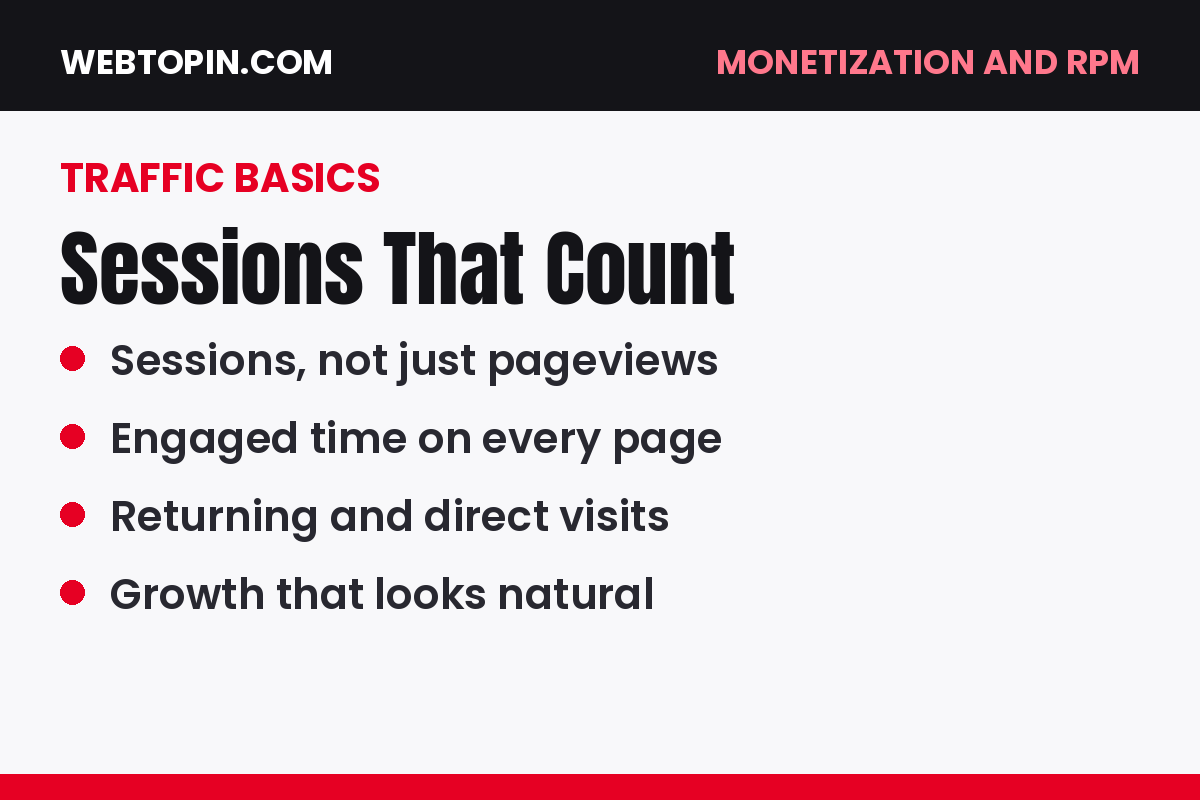
Your sessions must be genuine. Bought traffic, bot visits and engagement pods can inflate a number for a week and destroy an application — or an account — when the pattern is spotted. Real Pinterest traffic is entirely welcome; it is one of the most common sources for Journey blogs. What matters alongside the count:
- Sessions are growing or steady, not a single spiked week followed by silence.
- Readers behave like readers — they stay, scroll and open more than one page.
- Traffic comes from real platforms and search, not paid visit exchanges.
If your sessions are close to the line, wait until you clear it comfortably. Applying from strength beats applying on a technicality.
Your Homepage and Branding Must Look Like a Real Publication
Open your homepage as a stranger would. Does it look like a publication with an identity, or a default blog feed? Journey reviewers favour sites with a custom homepage that explains what the blog is and who it serves, a clear logo, a tagline, working navigation and categories a visitor can browse.
This is presentational, but it carries real weight: advertisers are paying to appear on your site, and Mediavine protects that trust. Building this kind of homepage, author presence and legal framework is exactly what Module 5: A Blog Ad Networks Want to Approve covers in our free course.

The Trust Pages Checklist
Missing or thin legal pages are one of the most common, and most avoidable, reasons small blogs get turned away. Before applying, confirm all of these exist and are linked where visitors can find them:
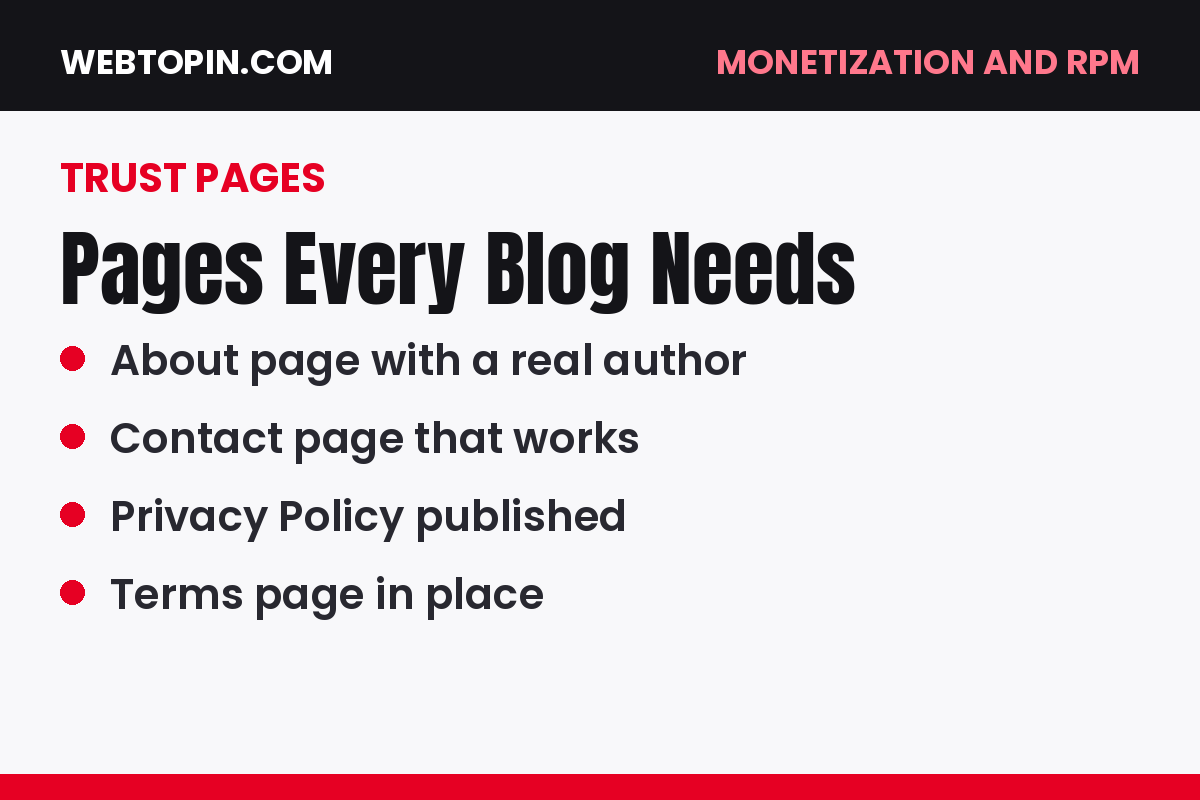
- An About page that names a real author or editor, with a photo and a genuine story.
- A Contact page with a working email address or form that you actually check.
- A Privacy Policy that honestly covers cookies, analytics and advertising partners — and is kept current.
- A Terms page setting out basic use of your content (strongly recommended).
- Author bylines on posts that match the person your About page introduces.
One caution: the Privacy Policy link you give your ad settings must be the real, live one. A wrong or placeholder link is a silent problem that surfaces later in earnings reviews.
Content Standards Reviewers Actually Check
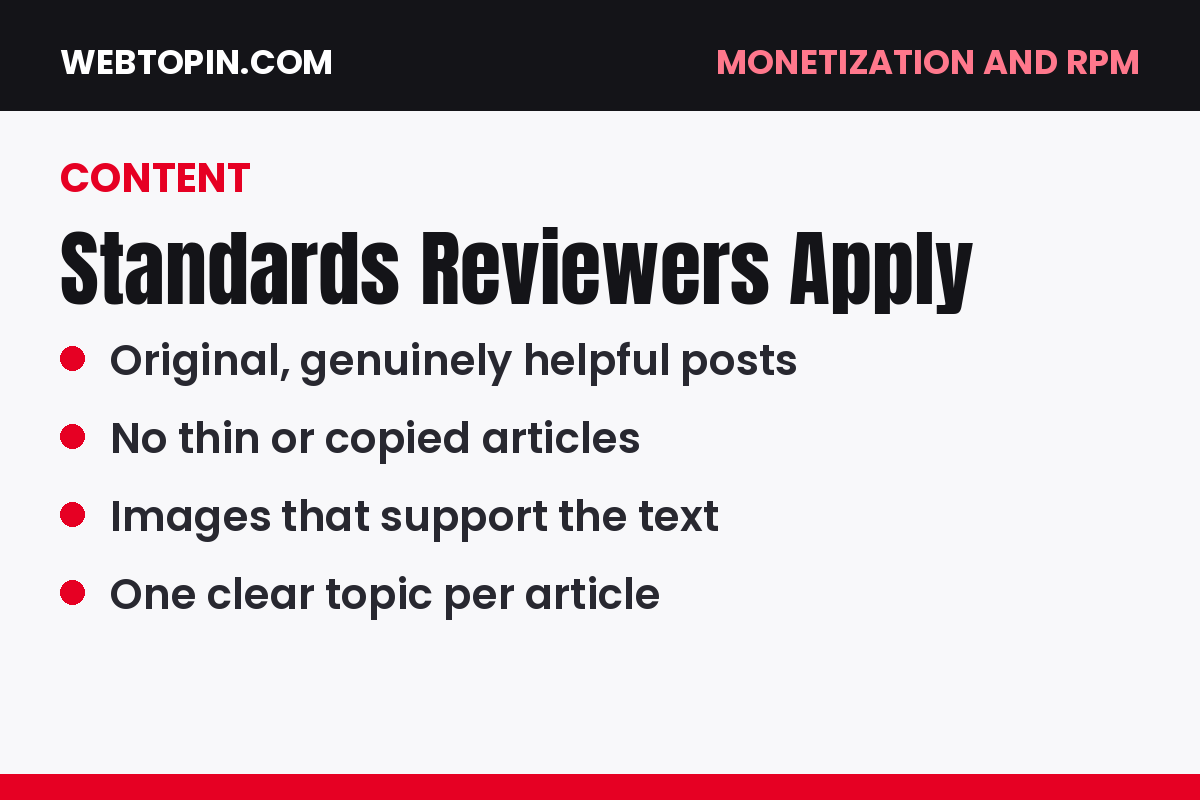
Your articles carry the application. Reviewers look for original writing that genuinely answers its topic, published consistently over time — not a burst of thin posts created the week before applying. Scraped content, lightly rewritten copies of other sites and empty category pages all work against you.
Depth matters twice: it proves the blog is real, and it keeps the sessions you already have engaged. Posts that hold a reader for half a minute or more are doing monetisation work long before ads appear, which is why our guide to writing blog posts Pinterest readers stay on pairs so well with this checklist.
Technical Health: Speed, Mobile and a Clean Layout
Most Pinterest readers arrive on a phone, so your site is judged on a phone. It should load quickly, stay visually stable while loading, and never bury the article under popups or banners before a word can be read. Check the basics: HTTPS works everywhere, images are sensibly sized, your theme is lightweight, and no plugin is visibly fighting another on the page.
You do not need a developer or a perfect speed score. You need a site that feels effortless to read on an ordinary phone connection — the same experience your Pinterest visitors already expect.

Approval Is the Starting Line, Not the Finish
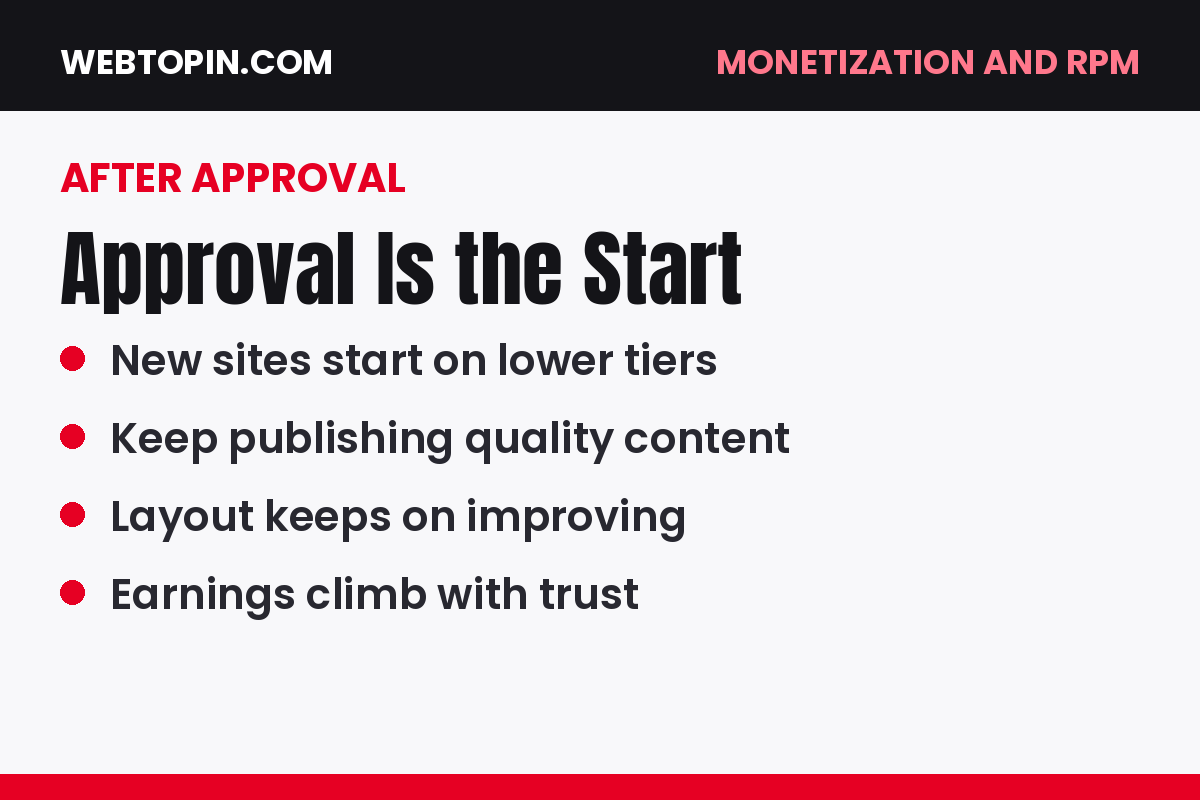
Getting accepted feels like the goal, but it is really the beginning of a second process. New Journey sites start on the lowest earnings tier and climb over the following sixty to ninety days as their traffic quality is proven, so a low opening RPM is normal and expected — not a verdict on your blog.
That climb, and the levers that influence it, is the subject of Module 10: Monetization and RPM. For now, your only job is to be approved with a site strong enough to climb quickly.
Frequently Asked Questions
How many sessions do I need for Mediavine Journey?
Journey is designed for smaller blogs and has historically opened applications at around 1,000 sessions over the previous 30 days — far below the main Mediavine programme. Requirements can change, so confirm the current threshold on Mediavine’s site before you apply.
Does Pinterest traffic count towards approval?
Yes. Pinterest is a legitimate, common traffic source for Journey blogs. What reviewers care about is that the sessions are real people who engage with your content, not where each reader happened to find you.
What should I do if my application is rejected?
Do not reapply immediately or repeatedly. Keep publishing, fix the most likely weaknesses — trust pages, thin content, site presentation — and apply again once the blog is visibly stronger. A later, better application beats three rushed ones.
Your Next Step
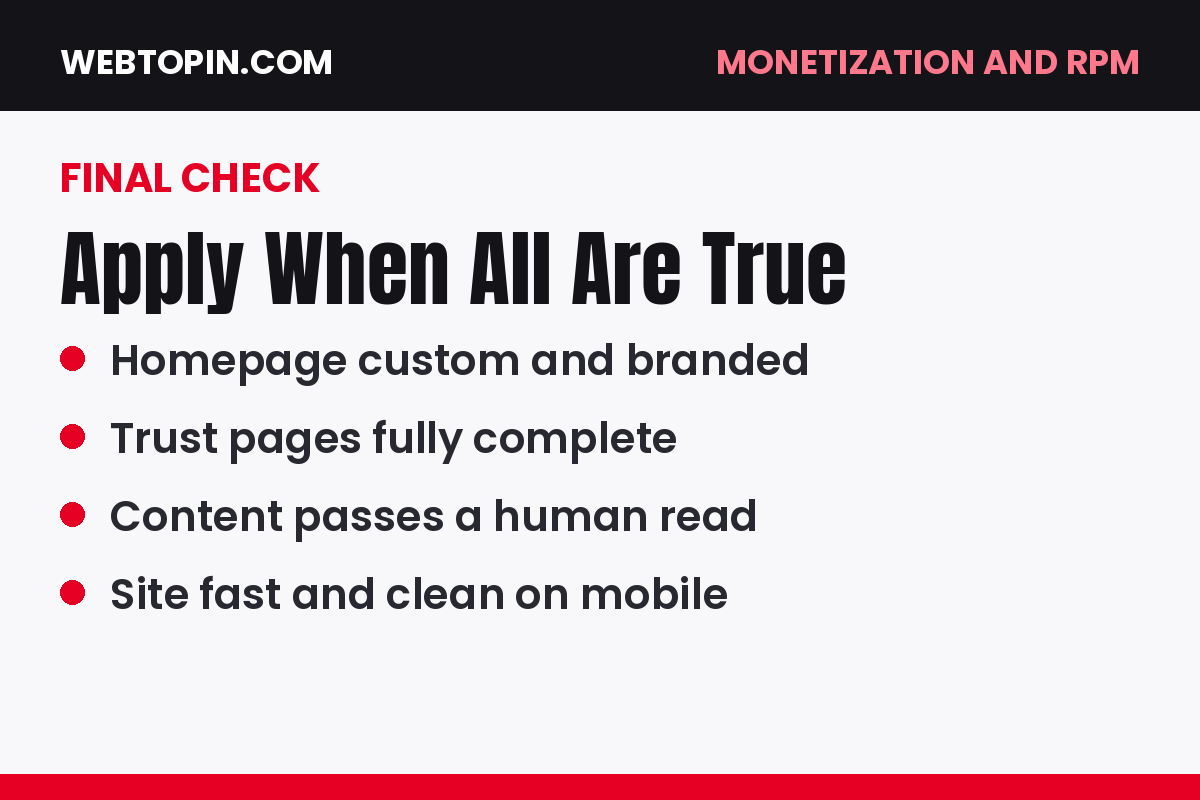
Print this checklist and audit your blog in one sitting, fixing items in order: trust pages first, then the homepage, then content gaps, then technical basics. When every line holds, apply — once, calmly, and from strength. Approval then becomes what it should be: a formality your preparation already earned.

One Comment