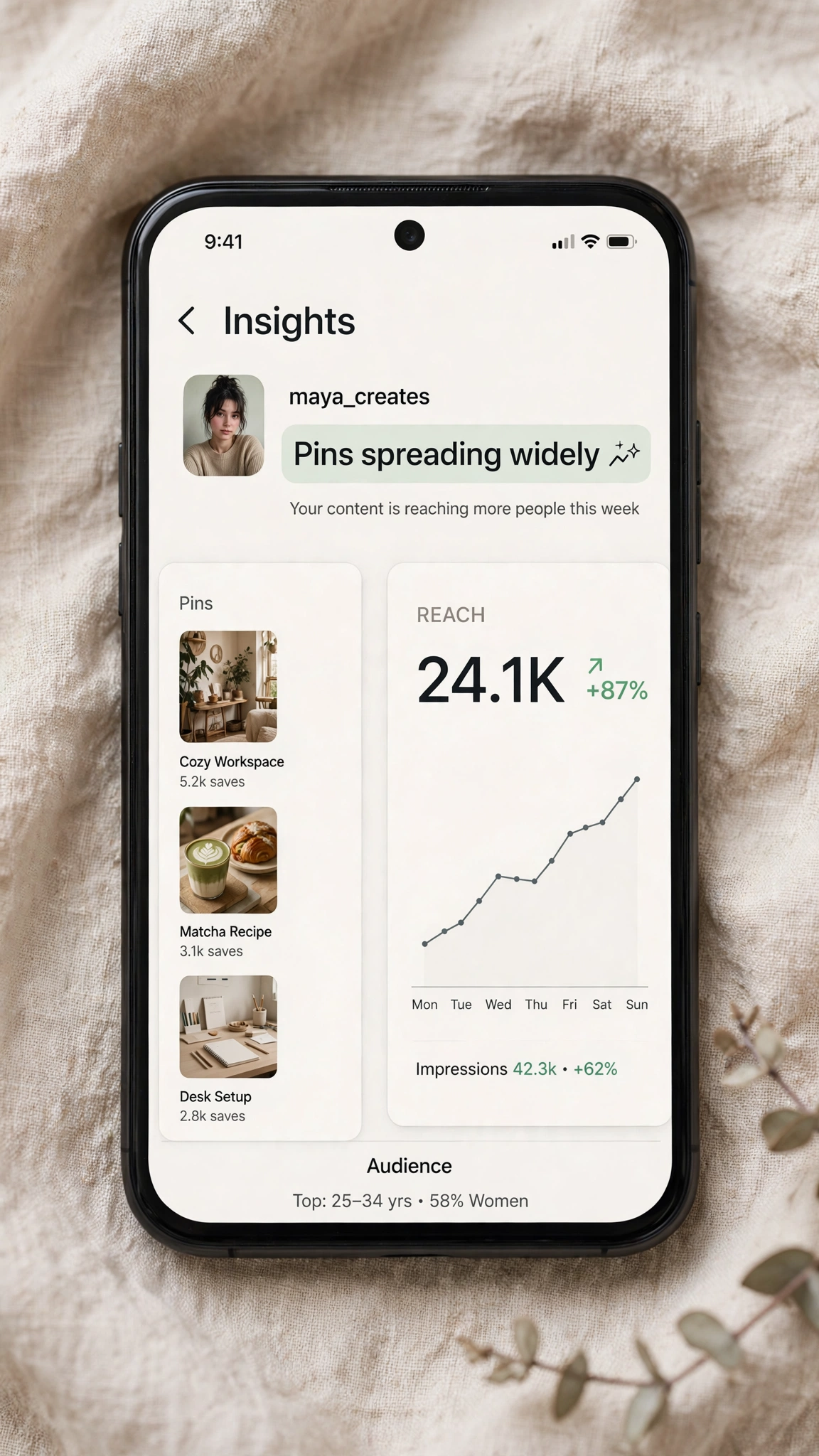
Most bloggers treat Pinterest like a noticeboard: publish a pin, watch the impressions, hope for clicks. But Pinterest is a recommendation engine, and the moment that decides a pin’s future is not the impression — it is the click, and more precisely, everything the reader does after it. Pinterest watches what happens when someone lands on your article: how long they stay, how far they scroll, whether they open a second page. Those post-click signals tell the algorithm whether your pin deserved its audience, and they quietly decide whether your next pins get pushed to thousands or shown to almost no one. Understand these signals and you stop guessing at growth — you start engineering the behaviour Pinterest actually rewards.
The Signals Pinterest Watches After the Click
Think of every outbound click as a small experiment Pinterest is running on your behalf. It showed your pin to someone; now it measures the result. The clearest signals, in plain language:
- Stay time — how long the reader remains on your page before leaving or returning to Pinterest.
- Scroll depth — whether they move down the article or bounce from the first screen.
- The second pageview — whether they click an internal link and keep reading on your site.
- Post-read engagement — saves and follows that happen because the article impressed them.
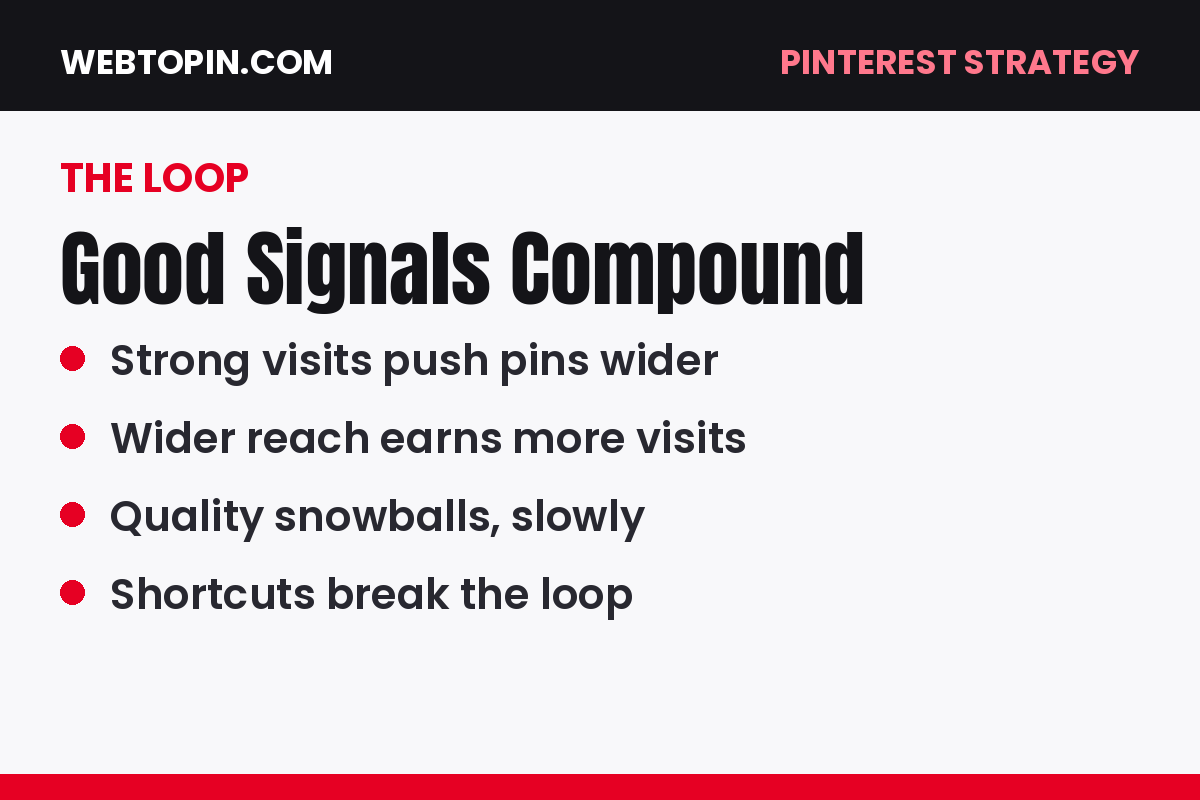
Positive results teach Pinterest that people like them want more of your content, and distribution widens. Weak results teach the opposite lesson, and each pin that follows starts with a smaller push. This is the foundation laid out in Module 1: Pinterest Foundations — the algorithm is not judging your pin, it is judging the experience your pin starts.
Signal One: Stay Time and the 35-Second Test
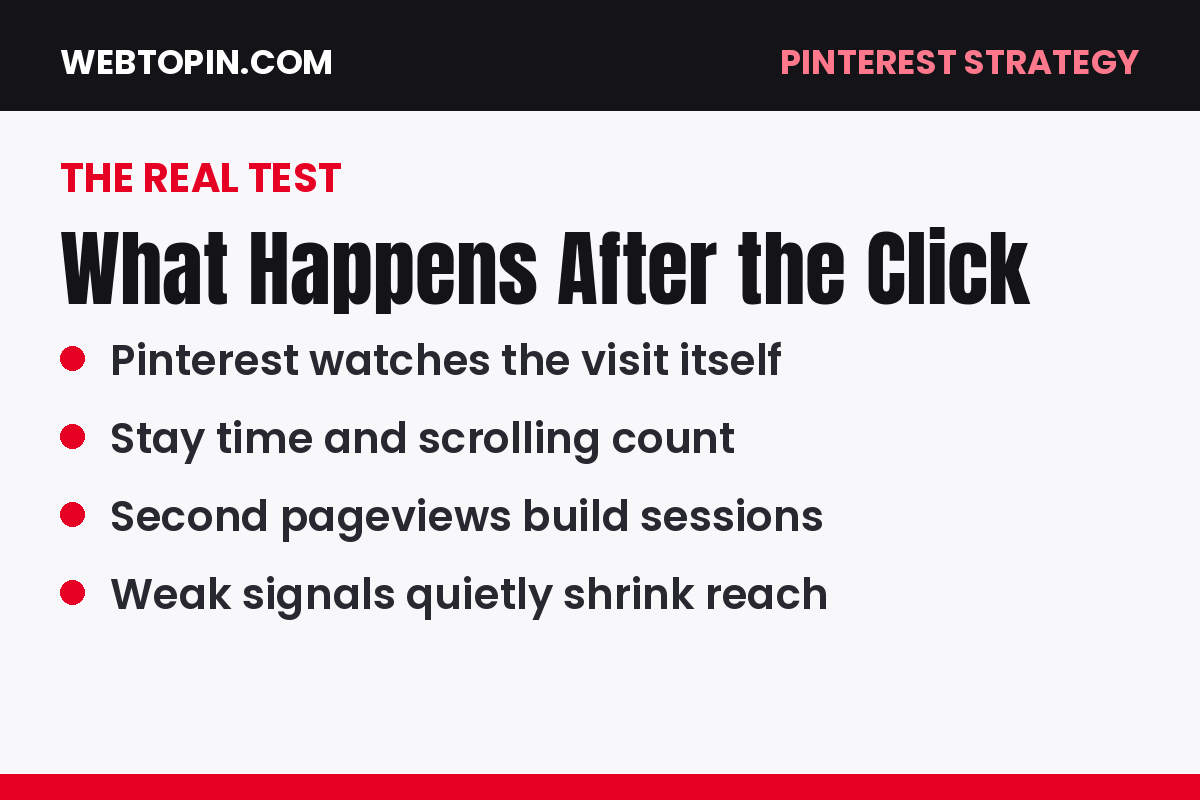
Of all the signals, stay time is the easiest to read and the hardest to fake. A reader who stays roughly thirty-five seconds or more has almost certainly read something real; a reader who leaves in four seconds has told Pinterest the visit was a mistake — whatever the pin promised, the page did not deliver it.
Stay time is earned in the first screen of your article. Open with the answer, the payoff or the story the pin advertised — not a long introduction about yourself. Short paragraphs, an early image and subheadings that promise progress all tell a skimming reader: keep going, it is worth it. Every technique for holding readers is covered in Module 6: Content That Keeps Readers.
Signal Two: Scroll Depth and the Second Pageview
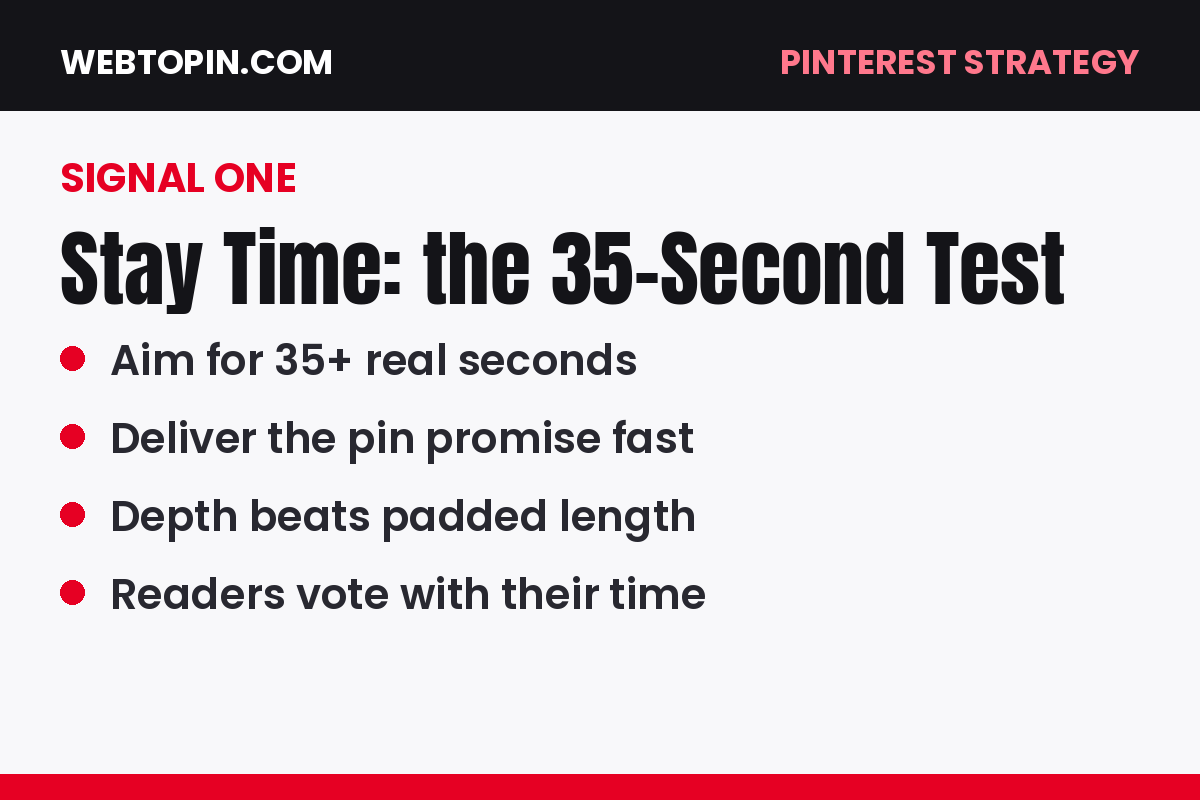
A reader who scrolls is a reader who is finding value section by section, so build articles that reward scrolling: alternate text with tall images, break long explanations with lists and examples, and place your most satisfying material throughout the post rather than saving everything for the end.
The strongest single signal is the second pageview. When a visitor clicks an internal link and reads a related article, your visit becomes a session — and sessions are what both Pinterest and advertisers value most. Link inside your topic clusters: a reader of one recipe wants the variation, the storage guide, the shopping list. Three to five honest, relevant internal links per article is a working range for most blogs.
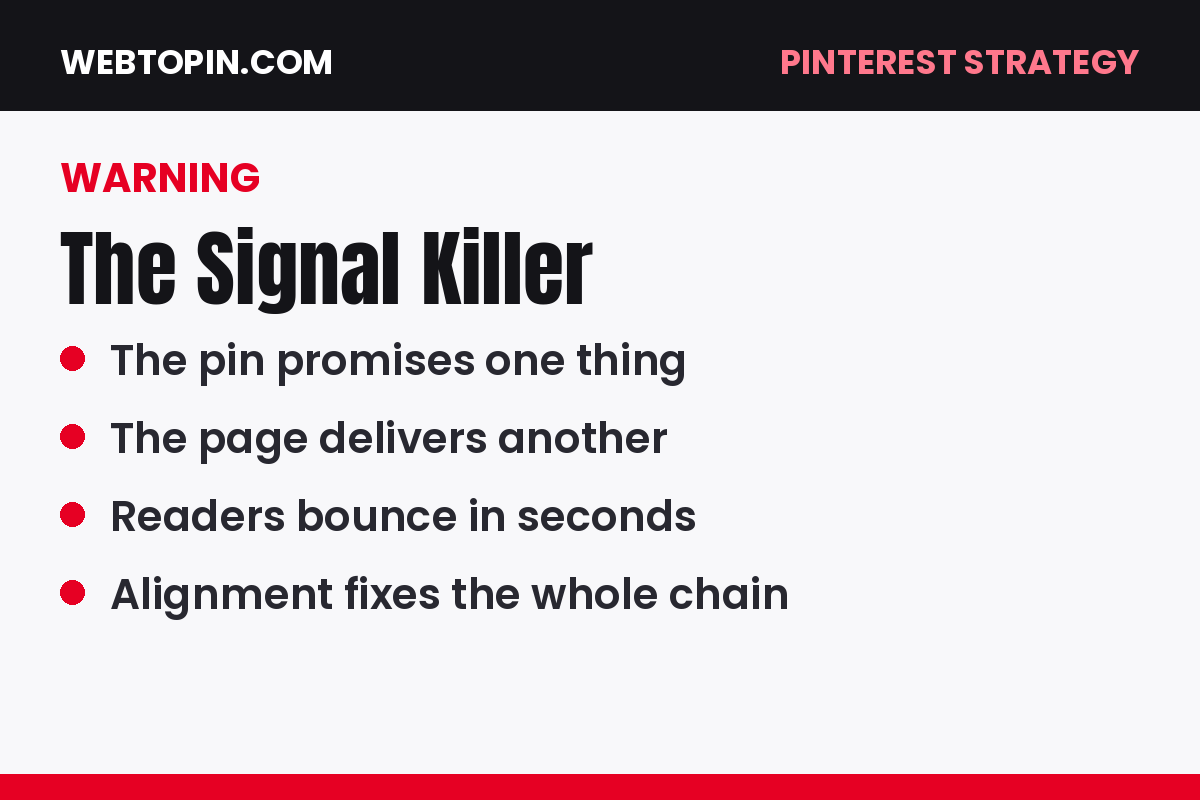
The Signal Killer: A Pin That Promises What the Page Doesn’t Deliver
Every signal above collapses if the pin and the article disagree. A pin promising “12 ideas” that lands on a page with seven, a dramatic headline over a mild article, a beautiful photo the post never mentions — each mismatch produces the four-second bounce, and repeated bounces teach Pinterest that your clicks are low quality even when your click rate looks healthy.
Audit your best-traffic pins against their pages. Does the article’s title echo the pin’s promise? Does the opening deliver it immediately? Does the image on the pin appear, or at least belong, in the post? Alignment is unglamorous work, and it is the highest-leverage audit a Pinterest blogger can run.
A Practical Checklist for Strengthening Every Signal
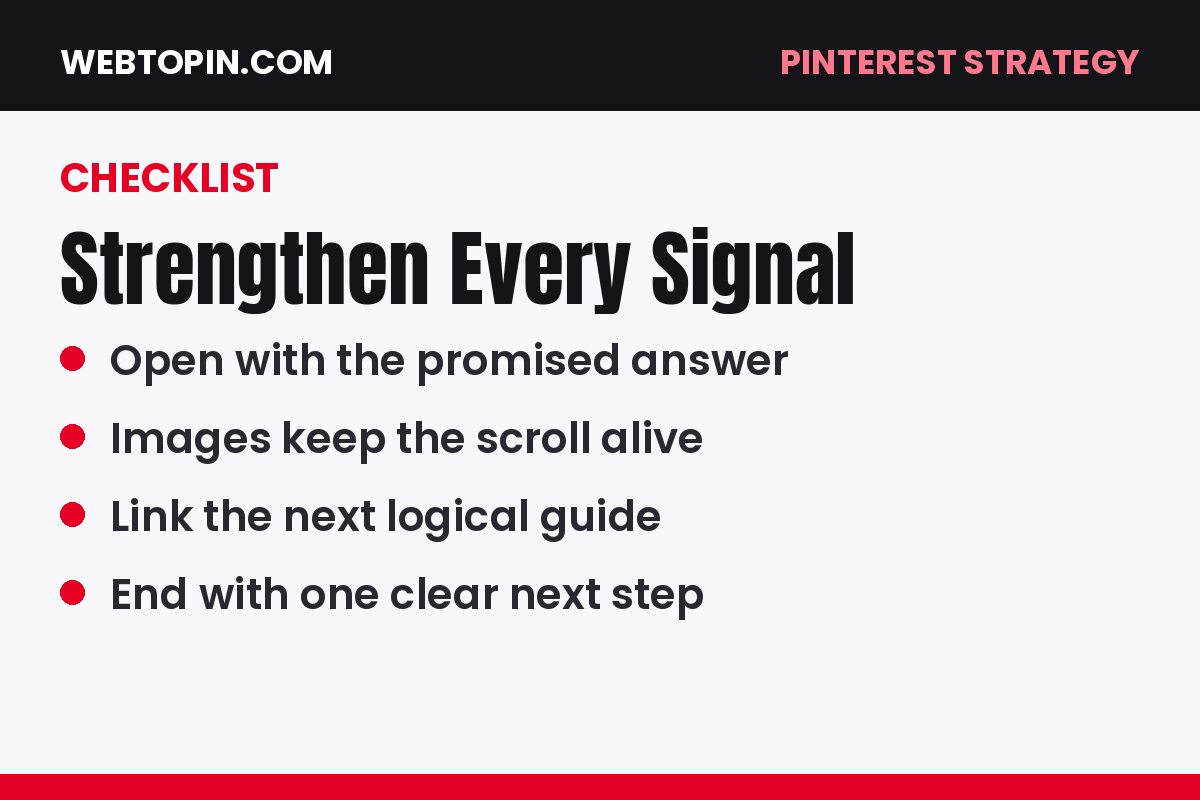
- Match the promise. Pin headline, article title and opening paragraph all describe the same payoff.
- Front-load value. Answer or preview the main benefit in the first screen, before any background.
- Break the scroll into rewards. Subheading, image or list every few hundred words.
- Link the cluster. Three to five internal links to genuinely related posts.
- End with a next step. A related guide or your course path, never a dead end.
- Check behaviour weekly. Watch time-on-page for your top Pinterest posts and fix the worst performer first.
If your pins are already getting seen but the clicks and sessions are not following, work through our step-by-step guide to why pins get impressions but no website clicks — it applies this signal framework as a diagnostic, pin by pin.
Frequently Asked Questions
How long does it take for better signals to improve distribution?
Pinterest learns continuously, but visible change usually builds over weeks, not days. Improve the articles behind your most-pinned posts first, keep publishing fresh pins at a steady pace, and judge the trend monthly. Accounts earn trust windows of roughly sixty to ninety days, and signal quality is a large part of what fills them.
Can one bad article hurt my whole account?
One weak post will not sink an account, but a pattern will. If most of your pins produce bounces, the lesson generalises. Conversely, a few strong articles that consistently hold readers can lift confidence in everything else you publish.
Do saves matter more than clicks?
Saves are useful distribution signals, but for a blogger the outbound click is the event that pays — it creates the session your advertisers value. Design pins for the click, write articles that deserve saves afterwards, and let the two signals reinforce each other.

Your Next Step
Pick your five most-pinned articles and read each one the way a stranger from Pinterest would: on a phone, in a hurry, looking for the promised payoff. Fix the opening of the weakest one today, add its missing internal links, and re-check its stay time in two weeks. Small, deliberate improvements to post-click behaviour compound into the distribution most bloggers chase with volume alone.